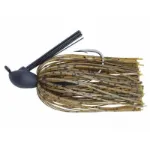
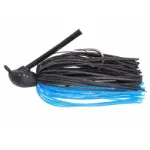
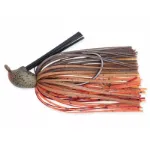
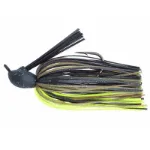
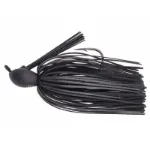
The Keitech Casting Jig is a silicone-skirted jig designed to accept a soft trailer and work close to cover. This version features a nominal weight of 3/8 oz. Its DECOY 4/0 hook, fiber weed guard, and two trailer keepers form a setup designed for a compact presentation. It belongs to the Casting Jig family, distinct from the Rubber Jig Model I Version 2.
Build a setup with the trailer
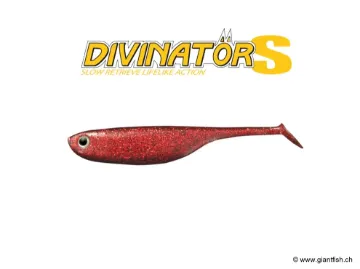
The thin silicone skirt adds volume around the head. The trailer extends the silhouette and adds its own movement at the rear. The two keepers on the shank are designed to hold the soft bait in place. The trailer's shape, thickness, and flexibility therefore influence preparation as much as its length alone.
Position the trailer against the hook to identify where it should exit. Thread it straight, then check that it does not bunch up against the skirt and that the hook point remains exposed. Before making a long cast, watch the rig in the water. You can then check its posture and see whether the trailer appendages stay free during the fall.
Approach cover with a precise angle
The weed guard positioned in front of the hook helps the lure pass near vegetation and wood. It does not make the jig snag-proof. Casting angle and retrieve direction still matter: a path that follows the edge of an obstacle often provides a clearer read than a cast that crosses it completely.
Move the rig in short steps when you want to feel contact. A pause after a change in bottom contour gives the trailer and skirt time to settle back into place. If the jig feels stuck, avoid immediately making repeated hard pulls; first try to understand the direction in which the line enters the cover.
Adjust the fall and retrieve rhythm
The listed weight corresponds to the nominal weight of this version. The trailer and other components of the rig influence how the entire setup behaves in the water. A bulky trailer can create more resistance than a slim model, so the choice should be made based on the presentation you want, not just the apparent size of the jig.
To work a spot, begin with a simple rhythm: fall, contact, pause, then move. After that, adjust the length of the pause or the size of the movement depending on the reactions you observe. This approach lets you compare different passes. After a fish or a bump, check the hook point, the weed guard fibers, and how well the trailer is held on the keepers. A rig that is reset in line works more consistently and makes it easier to read the next bites.